
Baharat: Bridging East and West
January 11, 2026
Afghan Wild Black Cumin Seed: History, Global Market Value and Export Potential
March 12, 2026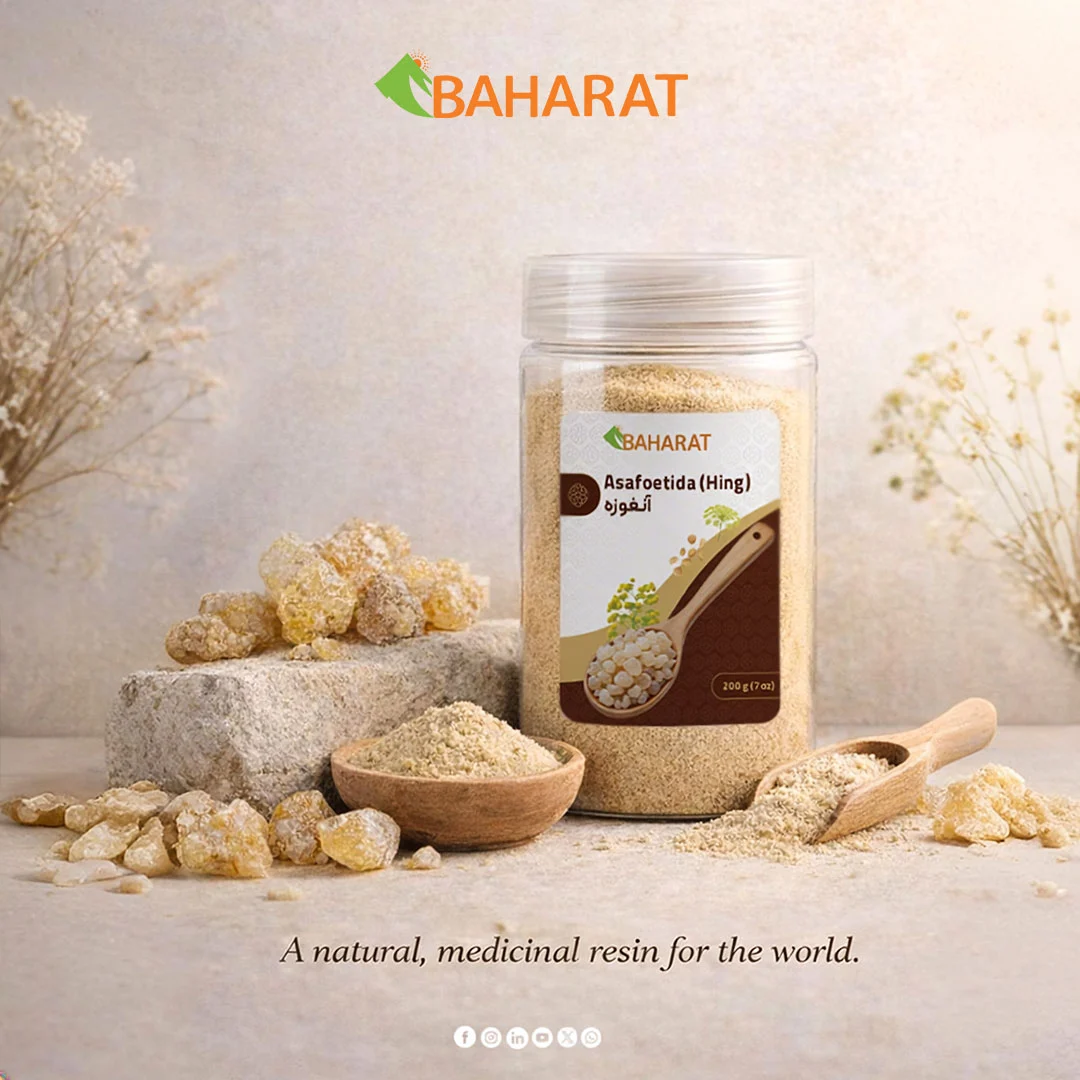
Introduction
Among the many natural botanicals originating from the Silk Road region, Asafoetida (Hing) is one of the most distinctive medicinal and culinary resins traded globally. Known for its strong aroma, therapeutic properties, and culinary value, asafoetida has been used for centuries in traditional medicine systems and regional cuisines.
Afghanistan is recognized as an important source of high-quality asafoetida. The country’s mountainous terrain, dry climate, and diverse ecosystems provide favorable conditions for the growth of Ferula species, the plants from which this resin is obtained.
Historically, asafoetida in Afghanistan has been collected from wild mountain plants. However, in recent years, cultivation efforts have expanded and the plant is now also grown in agricultural fields, especially in northern provinces, helping increase production capacity and support rural livelihoods.
Botanical Background
Asafoetida is obtained from plants belonging to the Ferula genus, part of the Apiaceae family.
Scientific classification
Genus: Ferula
Family: Apiaceae
Common name: Asafoetida / Hing
Persian: ( آنغوزه)
The resin is extracted from the root system of mature plants. Typically, the plant requires several years of growth before it becomes suitable for harvesting.
The harsh climatic conditions of Afghanistan, including dry soils and mountainous environments, contribute to the strong aromatic quality and potency of Afghan asafoetida.
Growing Regions of Asafoetida in Afghanistan
Afghanistan’s landscape provides natural habitats suitable for the growth of Ferula plants.
Traditionally, asafoetida has been found growing wild in mountainous regions. Today, it is both wild-harvested and cultivated in several provinces.
Important regions include:
- Northern provinces of Afghanistan
- Herat
- Badghis
- Farah
- Ghor
- Other semi-arid regions suitable for Ferula cultivation
These areas offer ideal ecological conditions, including dry climate, mineral-rich soils, and high altitude environments.
The expansion of cultivated asafoetida farms is an important step toward strengthening Afghanistan’s role in the global spice and medicinal plant market.
Forms of Asafoetida Produced in Afghanistan
Afghan asafoetida is traded internationally in several traditional forms depending on the stage of collection and processing. In Afghanistan, the resin obtained from the Ferula plant is generally classified into three primary natural forms before further processing.
Asafoetida Tears or Granules (Dana)
This is usually the first form obtained during the harvesting process. Small resin droplets emerge from the cuts made on the root of the plant and gradually dry into solid pieces known as tears or granules.
These resin grains are relatively pure and are widely valued in international markets.
Asafoetida Root Crown (Sarkesh)
During the harvesting process, additional resin accumulates around the upper part of the root where repeated incisions are made. This material is commonly known as Sarkesh in regional trade.
It typically contains larger resin masses mixed with plant fibers and is an important commercial form in the local and regional markets.
Asafoetida Resin (Shira)
As harvesting continues, the resin collected from the root surface becomes softer and more concentrated, forming what is known as Shira (raw asafoetida resin).
This form is widely used for industrial processing and herbal preparations.
Asafoetida Powder
For modern culinary and retail markets, asafoetida is often processed into fine powder. Powdered asafoetida is easier to use in cooking and spice blends.
Baharat Spice Co. processes and supplies high-quality asafoetida powder, making this traditional botanical accessible for global retail markets while also exporting the natural forms of resin for bulk buyers.
Culinary Uses of Asafoetida
Although raw asafoetida has a strong sulfur-like aroma, when cooked in oil or ghee it develops a rich umami flavor that enhances many dishes.
It is widely used in:
- Indian cuisine
- Central Asian cooking
- vegetarian dishes
- spice blends
- lentil and vegetable recipes
In many vegetarian dishes, asafoetida is used as a substitute for garlic or onion, adding depth of flavor while maintaining dietary restrictions.
Medicinal Properties and Traditional Uses
Asafoetida has been valued for centuries in traditional medicine systems including Ayurvedic, Persian, and Unani medicine.
Research on asafoetida has identified several bioactive compounds that may contribute to its medicinal properties.
Traditional uses include support for:
- digestion and relief of bloating
- intestinal health
- respiratory conditions
- antimicrobial protection
Its natural compounds have also been studied for anti-inflammatory and antioxidant effects, contributing to growing interest from herbal and nutraceutical industries.
Global Demand for Asafoetida
International demand for asafoetida has increased significantly in recent years. Several factors contribute to this trend:
Growing interest in natural medicinal ingredients
Expansion of global spice trade
Increasing popularity of plant-based diets
Rising demand from herbal supplement industries
Major markets for asafoetida include India, the Middle East, Europe, Southeast Asia, and North America.
Because high-quality asafoetida is relatively rare and harvesting is labor intensive, reliable suppliers play an important role in international trade.
Baharat Spice Co. and the Global Supply of Afghan Asafoetida
Baharat Spice Co. is dedicated to connecting authentic botanical resources from Afghanistan with international markets.
Through carefully organized sourcing networks and quality-focused processing, the company supplies Afghan asafoetida in several formats suitable for different industries.
The company exports asafoetida in the following forms:
- Asafoetida granules / tears (Dana)
- Asafoetida root crown (Sarkesh)
- Asafoetida resin (Shira)
- Asafoetida powder produced and packaged by Baharat Spice Co.
Products are available both in bulk supply for international buyers and retail packaging formats designed for global markets.
By combining traditional sourcing knowledge with modern quality standards, Baharat Spice Co. aims to ensure reliability, authenticity, and consistency in the international spice trade.
Future Opportunities for Afghan Asafoetida
Afghanistan has strong potential to expand its role as a global supplier of asafoetida. With increasing cultivation, improved processing methods, and stronger export networks, the sector can create significant economic opportunities.
Key priorities for the development of the industry include:
- sustainable harvesting practices
- expansion of cultivated Ferula farms
- improved processing and grading
- international quality certification
- stronger export marketing
Through these efforts, Afghan asafoetida can gain greater recognition as a premium medicinal and culinary ingredient in global markets.
Conclusion
Afghan asafoetida represents one of the country’s most unique natural exports. From its origins in wild mountain landscapes to newly cultivated farms, this powerful medicinal resin continues to play an important role in global spice and herbal industries.
With its distinctive aroma, traditional medicinal value, and growing international demand, asafoetida has strong potential as a high-value export product.
By supporting sustainable sourcing and modern processing standards, Baharat Spice Co. contributes to bringing this authentic botanical treasure from Afghanistan to markets around the world.