Cumin (Cuminum cyminum L.) is one of the world’s most important commercial spices, recognized for its distinctive warm aroma, culinary versatility, and growing role in food processing. Traded for thousands of years across Asia, the Middle East, and Europe, cumin remains an essential ingredient in both traditional cuisines and modern food manufacturing.
Afghanistan has long been recognized as a producer and exporter of high-quality cumin. For decades, Afghan cumin has supplied regional and international markets, earning a reputation for its rich aroma, natural cultivation, and reliable quality. International trade data consistently identifies cumin as one of Afghanistan’s significant spice exports.
Natural Growing Conditions
Afghanistan’s dry climate, abundant sunshine, and well-drained soils provide favorable conditions for cumin cultivation. The crop is produced across several agricultural regions where generations of farmers have developed practical knowledge of sowing, harvesting, and post-harvest handling.
Research conducted in Afghanistan also demonstrates the country’s suitability for cumin production and the potential to further improve productivity through modern agronomic practices.
Quality Characteristics
International buyers evaluate cumin based on several important quality parameters, including:
- Strong, characteristic aroma
- Uniform seed size and color
- High purity and low foreign matter
- Appropriate moisture content
- Essential oil content
- Compliance with food safety requirements
These characteristics determine suitability for both industrial processing and premium retail packaging. International quality standards such as those developed under the Codex Alimentarius provide clear specifications for cumin traded in global markets.
Applications Across Global Industries
Cumin is widely used throughout the food industry, including:
- Seasoning blends
- Meat products
- Rice dishes
- Bakery products
- Ready meals
- Sauces and marinades
Its essential oils are also valued in flavoring, herbal preparations, and natural ingredient applications.
Global Market Demand
Demand for cumin continues to grow alongside expanding international food industries, increasing popularity of ethnic cuisines, and consumer preference for natural ingredients.
Major importing regions include:
- South Asia
- Middle East
- Europe
- North America
For many manufacturers, consistent quality, traceability, and reliable supply have become just as important as competitive pricing.
Building Export Competitiveness
As international food regulations continue to evolve, exporting cumin successfully requires more than quality raw material. Buyers increasingly expect:
- Professional cleaning and grading
- Hygienic processing
- Modern packaging
- Product traceability
- Compliance with internationally recognized food safety systems such as HACCP and GMP
These practices improve product consistency, strengthen buyer confidence, and increase long-term market access.
Baharat Spice Co.
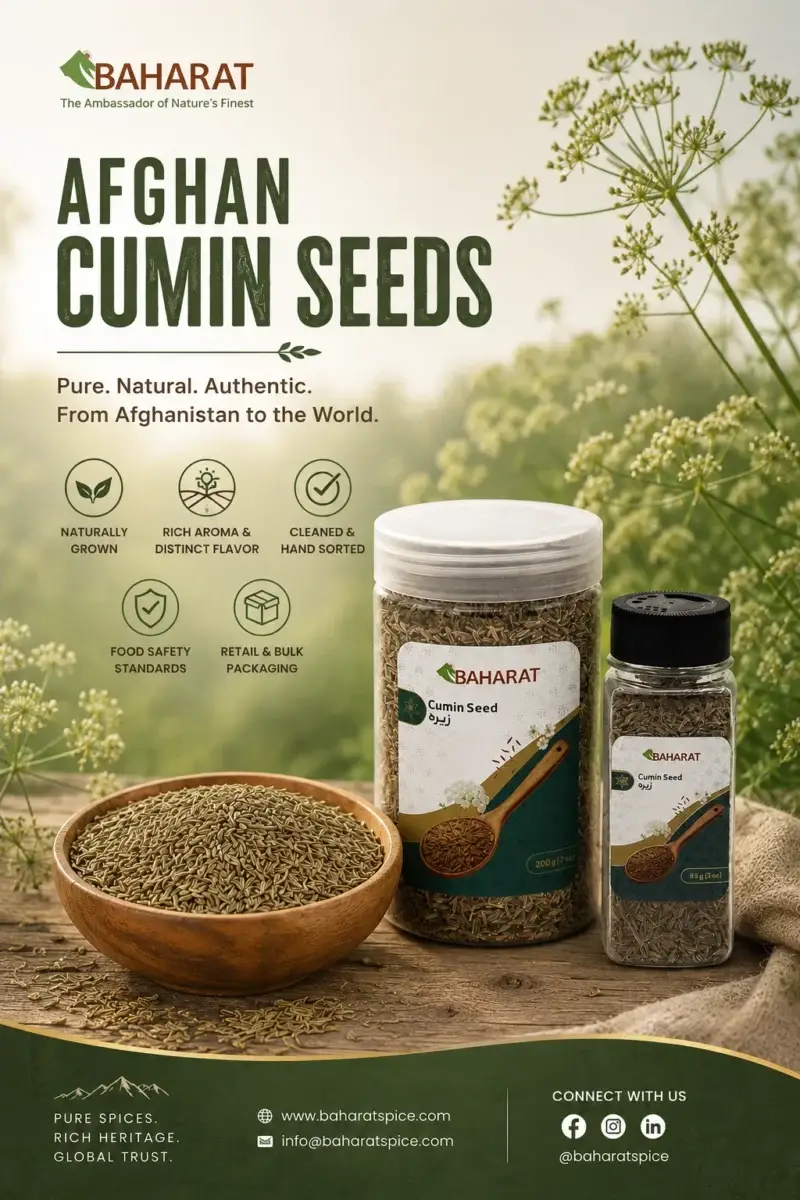
At Baharat Spice Co., we combine Afghanistan’s agricultural heritage with modern quality management to supply premium cumin seeds to international markets.
Our cumin products are available in:
- Whole cumin seeds
- Retail packaging
- Bulk export supply
- Private label solutions
By working closely with producers and applying internationally recognized quality practices, we aim to deliver products that meet the expectations of food manufacturers, distributors, and retailers worldwide.
Conclusion
Afghan cumin represents more than a traditional spice—it reflects generations of agricultural experience and an opportunity to meet the growing global demand for authentic, naturally produced ingredients.
With continued investment in quality assurance, food safety, and value-added processing, Afghanistan is well-positioned to strengthen its role in the international cumin trade, while companies like Baharat Spice Co. help connect this heritage with modern global markets.